
amNY: Where nostalgia turns decadent: The Moonlighters take Tribeca | April 9, 2026


By Avalon Ashley Bellos
Walking into The Moonlighters feels, almost immediately, like being returned to a Sunday morning you did not realize you missed, though this version arrives lacquered in something far more deliberate. You are back on the couch, the world not yet pressing in, your mother somewhere in the background orchestrating a breakfast that smells impossibly decadent, the kind that lingers in memory long after the moment has passed. The newspaper is open. The comics wait. There is warmth, yes, though it is edged with something more refined, more composed, as if nostalgia itself has been dressed for the occasion. Michael Fredo captures that sensation with surprising precision and installs it, fully realized, inside One Art Space.
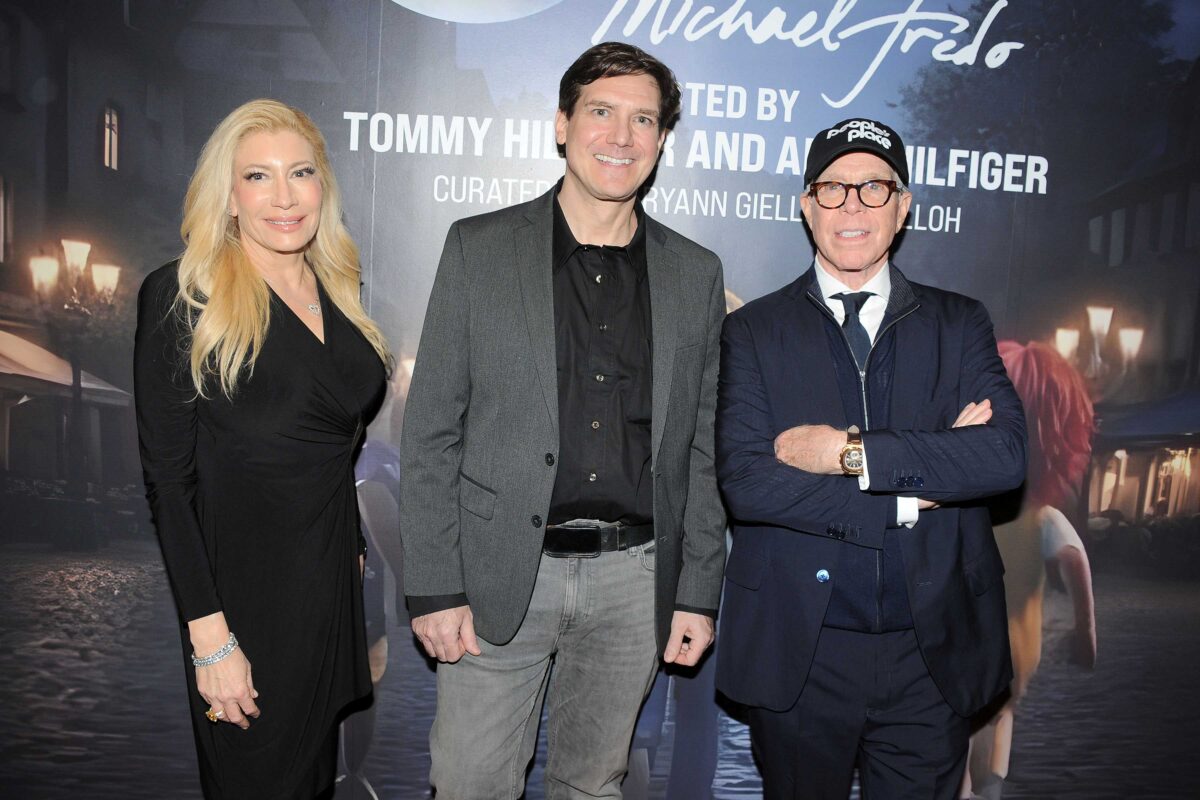
The room was, predictably, saturated. Tommy Hilfiger and Andy Hilfiger hosted with the kind of effortless authority that only comes from long-standing cultural fluency, surrounded by a constellation of New York figures who understand that presence, when properly wielded, is its own form of currency. The names carried weight. The atmosphere carried something rarer. There was a looseness, a buoyancy, a sense of genuine pleasure that felt quietly subversive in a world that often mistakes restraint for sophistication.
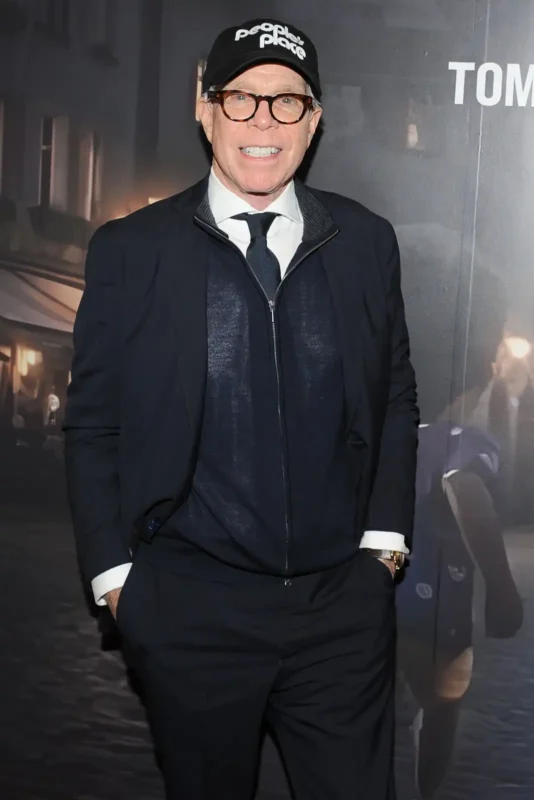
Tommy Hilfiger attends One Art Space Presents The Moonlighters by Michael Fredo
on April 4, 2026. Photo by PMC / Getty Images / Paul Bruinooge
Fredo’s characters arrive with immediate charm, though charm here should not be mistaken for simplicity. Wide-eyed, slightly mischievous, they occupy a space that feels suspended between innocence and awareness, between sincerity and something just a touch more knowing. The Smile Collection, inspired by MaryAnn Giella McCulloh’s first encounter with the work, does exactly what it promises, though it does so with a subtle confidence. The smile is not engineered. It arrives before you have the chance to interrogate it, before you can intellectualize your way out of the experience.
There is a particular intelligence embedded in this kind of frivolity, one that feels almost decadent in its refusal to justify itself.
The work evokes childhood without reducing it. This is not nostalgia polished into something digestible. It is memory as sensation, slightly chaotic, faintly surreal, populated by figures that do not quite obey the rules of the world they inhabit. That refusal to conform is precisely what gives them their vitality. There is no insistence on explanation, no demand for interpretation. The characters exist with a kind of quiet authority, which allows the viewer to meet them without resistance, without the usual performance of understanding.
Fredo describes The Moonlighters as a universe shaped by imagination, humor, and observation, though what emerges feels far more immersive than that language suggests. The absurdity anchors the work rather than destabilizes it. The viewer is drawn in, held there, and then, almost without realizing it, begins to inhabit that world.
One of the evening’s more unexpected moments arrived when Fredo performed his 1990s hit “Free,” collapsing time with a kind of effortless theatricality. The transition should have fractured the experience. Instead, it deepened it. Music, sculpture, persona—each element folded into the next, creating a continuity that felt less like performance and more like atmosphere.
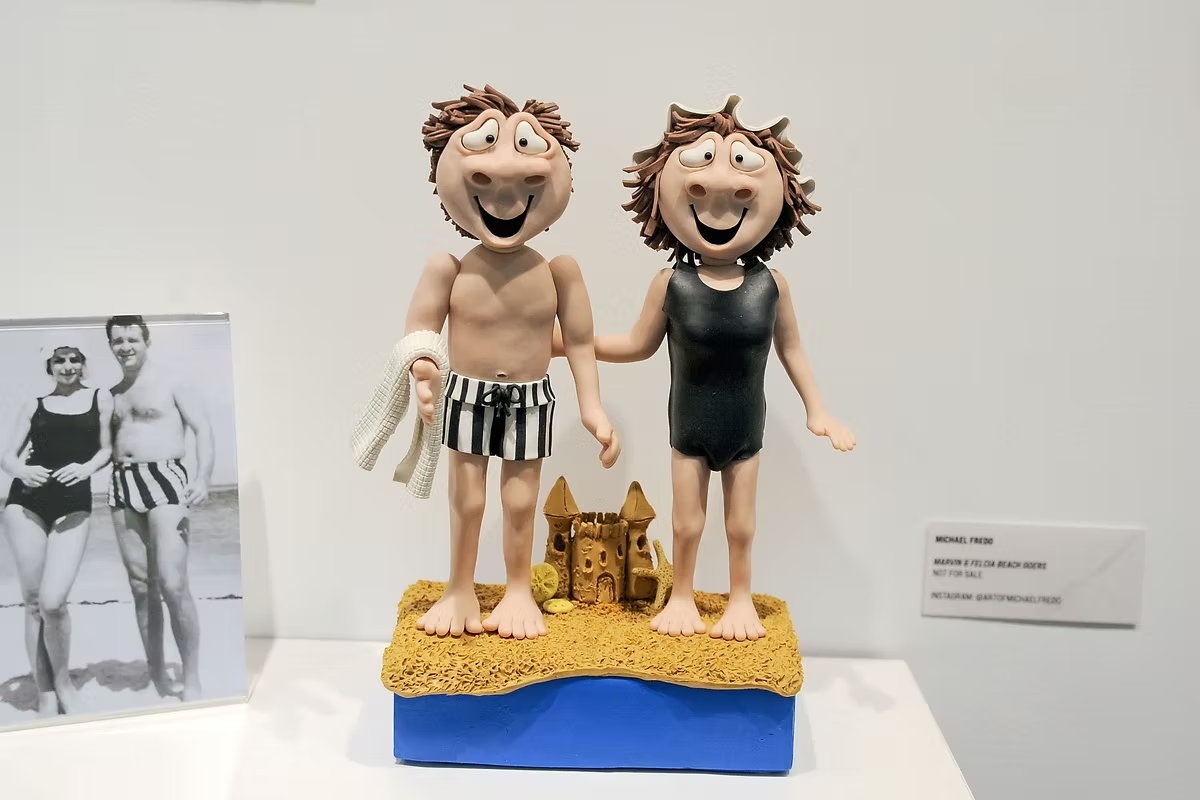
One Art Space continues to assert itself not through scale, but through precision. The gallery is modest, though increasingly formidable in its programming. Recent exhibitions suggest a curatorial instinct that is both sharp and intuitive, a willingness to present work that feels alive rather than merely acceptable. There is momentum here, though it is not loud. It builds quietly, with intention.Under the direction of MaryAnn Giella McCulloh and Mei Fung, the space has cultivated a rhythm that allows for both established and emerging voices to coexist with surprising ease. Past exhibitions featuring Shepard Fairey, Al Diaz, and Purvis Young suggest a program that values range without sacrificing clarity, one that understands that cultural relevance is not achieved through repetition, but through discernment.Within that context, The Moonlighters feels particularly well placed.
The inclusion of merchandise—tote bags, lunch boxes, objects that extend the work beyond the gallery—could easily tip into excess. Here, it reads as extension rather than dilution. The work resists preciousness. It invites interaction. It suggests, quite confidently, that art does not need to remain at a distance to retain its value.
The evening resisted neat categorization. It was social, though not superficial. Playful, though not empty. There is a tendency, particularly within more rarefied corners of the art world, to distrust anything that produces immediate pleasure, to equate difficulty with depth. Fredo dismantles that assumption with a kind of quiet elegance.
Joy, in this context, is not an absence of seriousness.
The ability to evoke an immediate, physical response, to construct an environment that feels both immersive and instinctive, requires a level of precision that is often underestimated. The impulse to smile, to laugh, to linger in something that feels both familiar and slightly off-kilter, is not trivial. It is, in many ways, the most difficult thing to achieve.
The Moonlighters does not ask to be decoded.
It asks to be experienced.
In a city that so often confuses difficulty with value, that gesture feels not only refreshing, but quietly, unmistakably luxurious.